
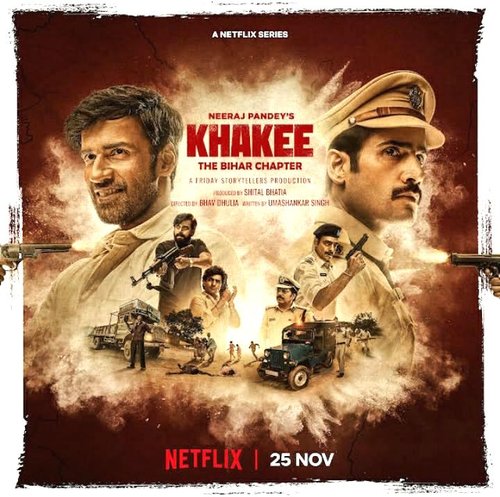
Khakee: The Bihar Chapter
User Ratings
No ratings yet. Be the first to rate this title.
Quick Overview
Explore the core cast-and-crew details, release info, and synopsis in a cleaner, easier-to-scan layout.
Synopsis
Khakee: The Bihar Chapter is a crime series built around the collision between institutional duty and the brutal realities of criminal power in a system already compromised by corruption, fear, and political influence. As a righteous police officer pursues a merciless criminal in Bihar, he finds himself navigating a deadly chase and a moral battle mired in corruption. That setup gives the show a familiar but durable dramatic engine: the pursuit of a single violent figure becomes a doorway into a much larger machinery of protection, patronage, intimidation, and compromised justice. What makes the material compelling is that the central conflict is not merely between cop and criminal, but between competing ideas of authority. The officer at the center may wear the state on his uniform, yet the series suggests that real power is dispersed among gang networks, caste alignments, backroom political arrangements, and the fear that governs entire regions long before a formal investigation begins. This creates a story in which every arrest attempt carries political consequences, every apparent victory risks retaliation, and every moral choice is tested by the possibility that legality alone is not enough to restore order. The Bihar setting also matters because the show is not presented as abstract crime fiction; it wants the local texture, dialect, social pressure, and entrenched structures of violence to define the stakes. That gives the chase a grounded intensity and prevents the conflict from feeling like generic genre spectacle. Khakee: The Bihar Chapter ultimately plays as both an action-driven manhunt and a broader examination of how law struggles to assert itself in environments where crime has already learned to speak the language of governance, survival, and public legitimacy.
Series Info
- Creator
- Neeraj Pandey
- Director
- Bhav Dhulia
- Producer
- Shital Bhatia, Abhishek Chouksey
- Screenwriter
- Neeraj Pandey, Umashankar Singh
- Network
- Netflix
- Production Co
- Friday Storytellers
- Rating
- TV-14
- Genre
- Crime, Drama, Action
- Original Language
- Hindi
- Release Date
- Nov 25, 2022
Reader Comments
Share your thoughts about this title. All comments are reviewed before they appear.